
American Intelligence
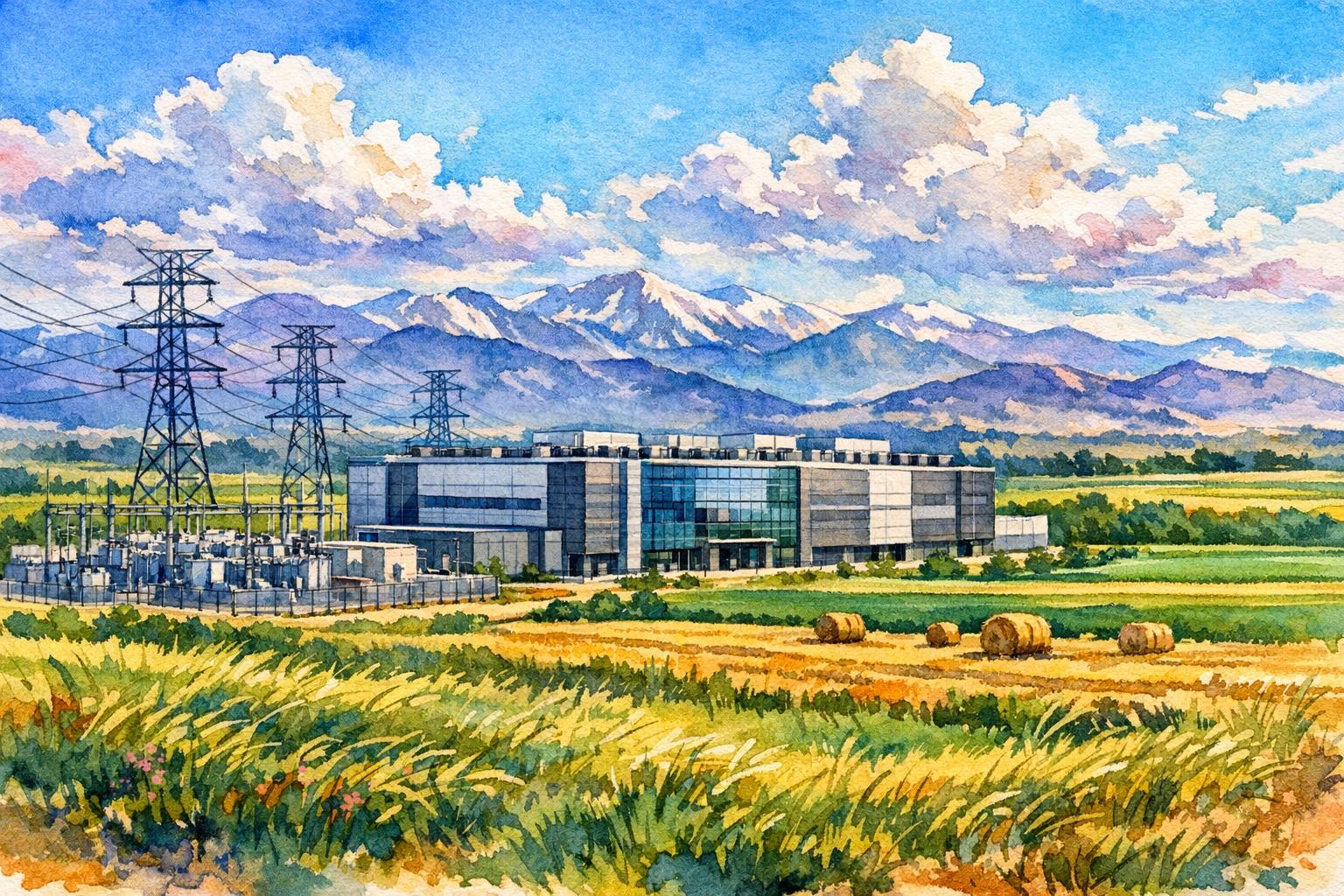
When news broke that nearly half of U.S. data centers planned for 2026 would be delayed or canceled, an almost ecstatic response swept across social media platforms. Too many people thought to themselves that it was good, that data centers were a nuisance, and that we were better off without them.
One comment in particular said “Cancel them all. We are living well without them,” and all the replies shared the sentiment. These frustrations aren't coming from nowhere.
The frustration over data centers is both real and earned, in large part because the initial expansion of data centers came with tax handouts, no energy supply, and a culture of secrecy, bound by non-disclosure agreements, that exacerbated distrust in communities across the country. But the people cheering these delays have badly misread what is actually happening, who it hurts, and what it means for America's position in the world.
The delays betray the weakness of the American industrial base and our own capacity to invest in more infrastructure. One of the key culprits is a device most Americans couldn't pick out of a lineup: the electrical transformer. A transformer is some niche technology. It is the box on the utility pole at the end of your street, scaled up to industrial size, the piece of equipment that steps high-voltage electricity down from the grid so it can safely power a building. Data centers need enormous ones, custom-built, and they need a lot of them. Before 2020, you could order a high-power transformer and receive it in roughly 24 to 30 months. Today, according to Bloomberg's reporting on Sightline Climate data, lead times have stretched to as long as five years. For a data center whose deployment cycle is meant to run 18 months or less, that is a project-killer.
Of the 16 gigawatts of capacity planned to come online this year across 140 projects, only 5 gigawatts are currently under construction. Everything is ready: the land, the checks, the plans, but they can’t proceed because there are no transformers.
The reason there are no transformers is that the United States spent decades offshoring the industrial base that builds them. Domestic factories are running at full capacity with multi-year backlogs. Nearly $2 billion in new North American manufacturing capacity has been announced but none of it comes online before 2027.
Instead, builders have had to go to the global market, which runs through China. The AI buildout meant to secure American tech supremacy is, at its physical foundation, dependent on Chinese manufacturing, from transformers to batteries, key components for our domestic infrastructure and energy needs.
And while half of America is cheering the slowdown from a misguided and often factually incorrect understanding of the impact on local grids, China is not slowing down. The United States currently commands roughly three-quarters of the world's computing power. That lead is the material foundation of American AI dominance, and it is not permanent. China has spent years building domestic energy capacity and engineering workarounds to U.S. chip export controls. So, every delayed data center is a widening of that gap and every cancelled project is compute capacity that will not exist here, but will somewhere else, and likely in a country that does not share our interests.
We have built a strategic weakness in the foundation of our technological future. Since China manufactures the majority of critical electrical components used in American data centers, they could use that as leverage against us in a global competition without firing a single shot. Forget about a hot war with China. They can choke off our own development in a crisis instead, and that’s without taking control of any semiconductor facilities present on Taiwan.
This foundational error has concrete economic consequences. Many proponents of data center buildouts point to high-paying jobs, both for managing the center and the initial construction phase, as well as the general benefit to the communities hosting them.
Data center construction jobs typically pay up to 30 percent more than typical construction wages for skilled trades that built the middle class, like electricians, pipe layers, and mechanical specialists. Many of these opportunities are in places that have been waiting decades for an economic development that works in their favor. When projects stall, whether from community resistance or supply chain issues, those jobs don't materialize.
Community opposition to poorly sited data centers is legitimate. Asking that these facilities pay their fair share for water and grid infrastructure is legitimate, which is something the Trump Administration has prioritized through the Ratepayer Protection Pledge. However, treating this particular wave of delays as a victory for ordinary people is a fundamental misreading of who loses. The people cheering on social media are largely not the electricians who needed the work, not the rural communities that needed the tax base, not the defense planners who need the compute capacity. The actual villain here is a generation of policy choices that traded away the industrial base that made it possible to build things at all.