
American Intelligence
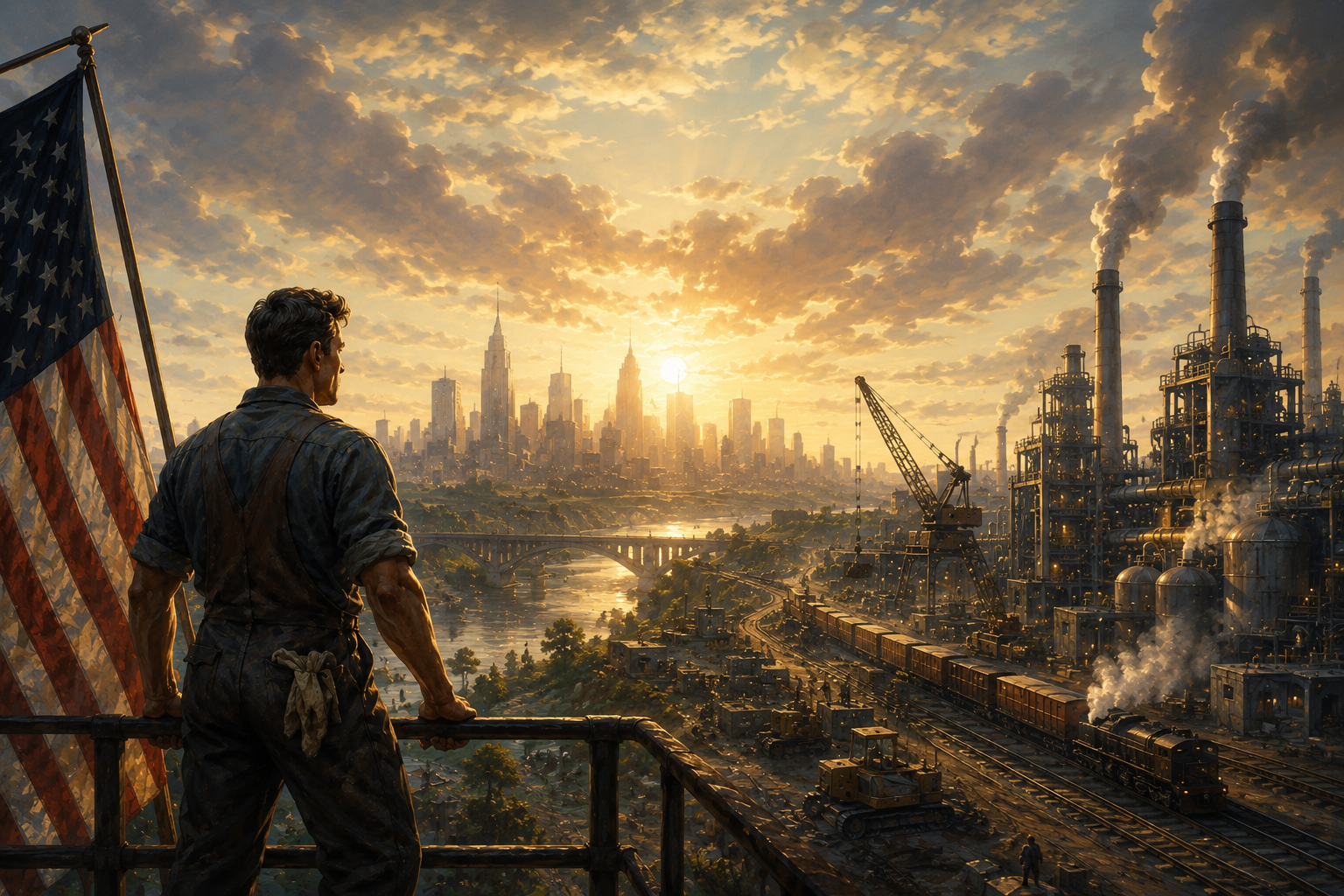
There was a moment at the Reindustrialize Summit in Detroit when everything clicked. Seven Gen Z executives sat on stage taking turns explaining how they each created companies to solve existential problems previous generations thought were too hard. During the conversation one of the founders, Valar Atomic CEO Isaiah Taylor who said “We are a couple of young guys who want to save the west.”
At that moment I realized this conference was different. It was a preview of how American ingenuity and entrepreneurship can reverse modern malaise and bring about true revitalization. And part of its uniqueness was the summit was filled with real people actually doing it.
Last week was the third annual Reindustrialize Summit hosted by the New American Industrial Alliance. This wasn't another conference about theoretical innovation or corporate release of an app destined to underwhelm. On contraire, it was a gathering of builders, entrepreneurs, hardware startups, engineers, investors, and policymakers who aren't just talking about America's industrial future, but actively constructing it.
And this Summit happened in exactly the right place: Detroit.
For too long, Detroit has served as shorthand for American decline, a once-great industrial city reduced to high crime, empty lots, and population loss. But that story no longer holds. This past week I saw a city that served as a symbol for how reindustrialization could restore cities and communities across the nation.
Spend time in Detroit today and you'll see something different: energy, ambition, and a city remembering what it was built to do. Heck, there was a Gucci store 50 feet from the event! Not to mention a top tier list of bars, speakeasies, Detroit-style pizza shops, and startups.
This year's summit felt bigger than the first two gatherings. Instead of a handful of companies tucked into one corner doing demos, every hallway showcased real products: drones, electric vehicles, maritime tech, robotics, and other hard-tech innovations. These weren't pitch decks or new apps, they were tangible things you could touch and imagine scaling across the real world.
That distinction matters. America's next innovation wave cannot be confined to software alone. This optimistic future requires “atoms, not just bits” which was an axiom uttered by many at the event. Factories, supply chains, energy infrastructure, manufacturing, and skilled labor all demand building things in places too often written off by coastal elites.
The summit was not Silicon Valley parachuting into Detroit but instead the Motor City serving as a natural gathering point for builders nationwide. A grand central station for America's next wave of industrial dynamism. You could feel that energy in meeting entrepreneurs from Michigan, Ohio, South Carolina, Texas, Florida, and California. All of the entrepreneurs, engineers, and builders who I met all embodied a spirit of national ambition. The excitement and energy was infectious.
America needs this renaissance. For years, our economic engine has been confined to a few superstar cities and narrow sectors. But leading the next era of technological development requires a broader map: the industrial Midwest, the South, the Mountain West. As Freightwaves CEO Craig Fuller said recently “this is the Heartland Renaissance.”
The summit made clear that policy has a crucial role. Federal leaders discussed AI governance, drone regulations, data centers, workforce development, and energy policy. Reindustrialization won't happen by accident. It requires faster permitting, abundant energy, modern infrastructure, sensible AI policy, and a light touch regulatory regime that encourages deployment over delay.
But the most surprising conversation wasn't about economics or policy, it was about beauty.
One discussion led by Packy McCormick and Micah Springut of Monumental Labs centered on how reindustrialization and the leveraging of AI could make craftsmanship affordable again. For decades, too many communities abandoned stone, ornamentation, and beautiful architecture because costs became prohibitive. But if AI tools can reduce the expense of working with traditional materials, reindustrialization doesn't have to mean ugly, disposable, purely utilitarian design.
It can mean building beautifully again.
That insight lingered with me. As Micah noted: “If Florence produced enduring art during the Renaissance with roughly 70,000 people, what could 300 million Americans create in an age of abundance, entrepreneurship, and technological renewal?”
This optimistic vision sits at the heart of reindustrialization. It's not nostalgia or economic freezing, it's the belief that America can combine its industrial inheritance with the most promising future technologies.
AI can help us design, manufacture, inspect, and optimize. Robotics can make dangerous work safer and enable new production methods. Advanced manufacturing can shorten supply chains. Skilled trades can become more productive, respected, and central to national prosperity.
Reindustrialization holds such great promise if we reach out and embrace it.