
American Intelligence
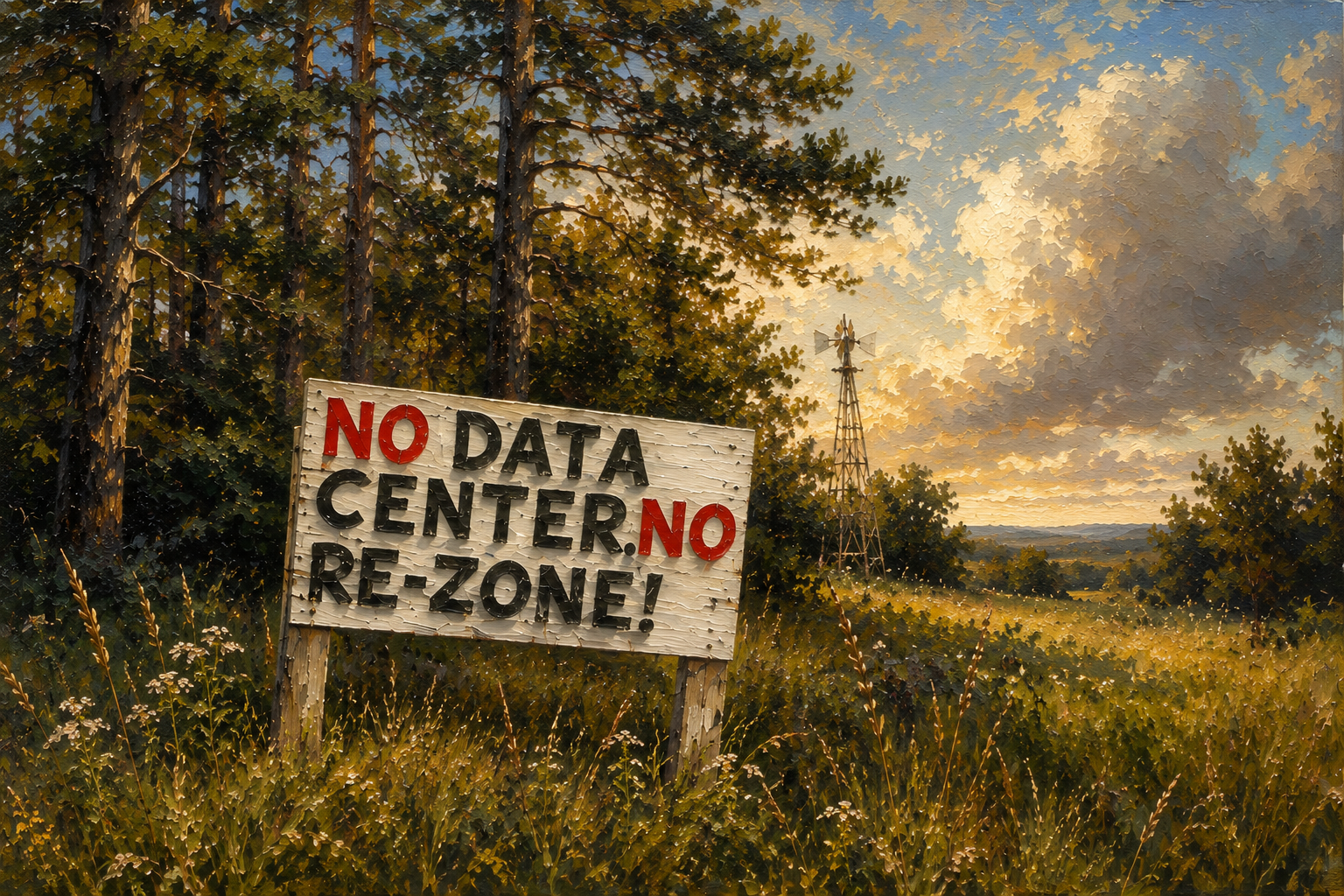
Over the past few years, public acceptance of data centers has plunged. An April survey from The Washington Post found almost 60 percent of Virginians oppose construction, up from less than 25 percent three years ago. A recent poll in Pennsylvania reported 16 percent of respondents would accept a nearby data center. A Reuters poll from June found similar numbers nationally, with 14 percent approving.
This backlash is affecting politics. Half of Festus, Missouri’s city council lost re-election after approving a local data center project. Iowa gubernatorial candidate Zach Lahn won his primary over a Trump-backed opponent after promising a data center moratorium. Other politicians, not wishing to wait for the fallout, have taken action to ban them entirely.
Some concerns are aesthetic: people do not want unappealing data centers being built nearby. Others are simply skeptical of AI and the new technological capabilities associated with it, something which also explains the recent trend of attacks on Flock cameras.
The largest concerns focus on data centers driving up electricity costs. Reports from independent monitors of grid operators determined that data center demand accounted for a third of PJM’s 2028 market charges. This is reflected in polling: Pew found that 43 percent of Americans think data centers are a “major reason” for increased costs, and fully 66 percent think that they are at least a minor factor.
The companies behind data center construction have sought to push back in a variety of ways. Some have sought to argue that the increased electricity costs are a myth, and that they would be happy to provide their own power sources—but that permitting costs are too high. Others have fallen back on the argument that counties have reaped the benefits of data center construction via tax revenues and that data centers bring jobs.
As evidenced by the polling, these arguments are not working. The jobs argument has fallen flat, as construction jobs are temporary and permanent staffing levels for data centers are merely roughly two dozen. More money in local taxes could, down the line, result in improved roads or nicer schools—but by that point, data centers may already be banned.
None of these mollify concerns over electricity costs. Dismissing them as a Chinese or Russian plot will likewise not mitigate these worries, in the same way that Democratic insistence that the Trump campaign colluded with Russia did nothing to damage Republican support for the president. Telling voters that their concerns are an artificial fiction will aggravate, not alleviate, hostility on the issue.
The Trump administration sought to placate these concerns with their release of the Ratepayer Protection Pledge, which has been signed by most major big tech companies, semiconductor manufacturers, and utilities companies, among others. The core is a promise that data center owners will pay for or provide all electricity they use. It is a noble attempt to realign private sector priorities with the interest of Americans at large. However, its voluntary nature, coupled with a lack of any method of enforcement other than a promise, has been adequate enough to slow the increasing pace of opposition to data center construction.
For a variety of reasons—from falling behind our adversaries in AI development to the fact that, though Americans oppose data center construction, they still wish to go online and use AI in their daily life—this opposition is concerning. Without action, tech companies and other industries downstream of the AI-sector economic boom risk seeing data centers banned entirely. History is replete with examples, such as nuclear power bans in Austria and Germany, of technological progress being stopped by fear campaigns.
To avoid this potential economic and national security catastrophe, Congress should consider passage of a bill which transforms the Ratepayer Protection Pledge into a certification program. The program, which could be overseen by the Secretary of Energy, would see participants agree to pay for or provide all electricity. In exchange, they would receive faster permitting for construction of their centers and, if they wish, the construction of energy sources to power them, along with quicker grid connectivity. Those found to be in violation of their pledge would be fined for each day they are found to be in violation.
This can be a win for tech companies and Americans. Tech companies will be able to construct more and faster, instead of having to wonder if they might be banned entirely from construction in the near future. Americans can be assured that their electricity bills will not increase due to data centers.
This will not eliminate all concerns over data center construction. But it will remove one of the biggest stumbling blocks, and will help ensure America will not fall behind when it comes to developing the technology of the 21st century.